Nancy Grace Roman Space Telescope, tracked live: where it is, what it's doing, and its first images as they're released.
L+---:--:--:--
Coasting to Sun–Earth L2, 1.50M km beyond Earth.
Launch → science operations · 110-day plan
Range from Earth
———
Speed
———km/s
One-way signal delay
———s
Cruise to L2
———
Latest confirmed
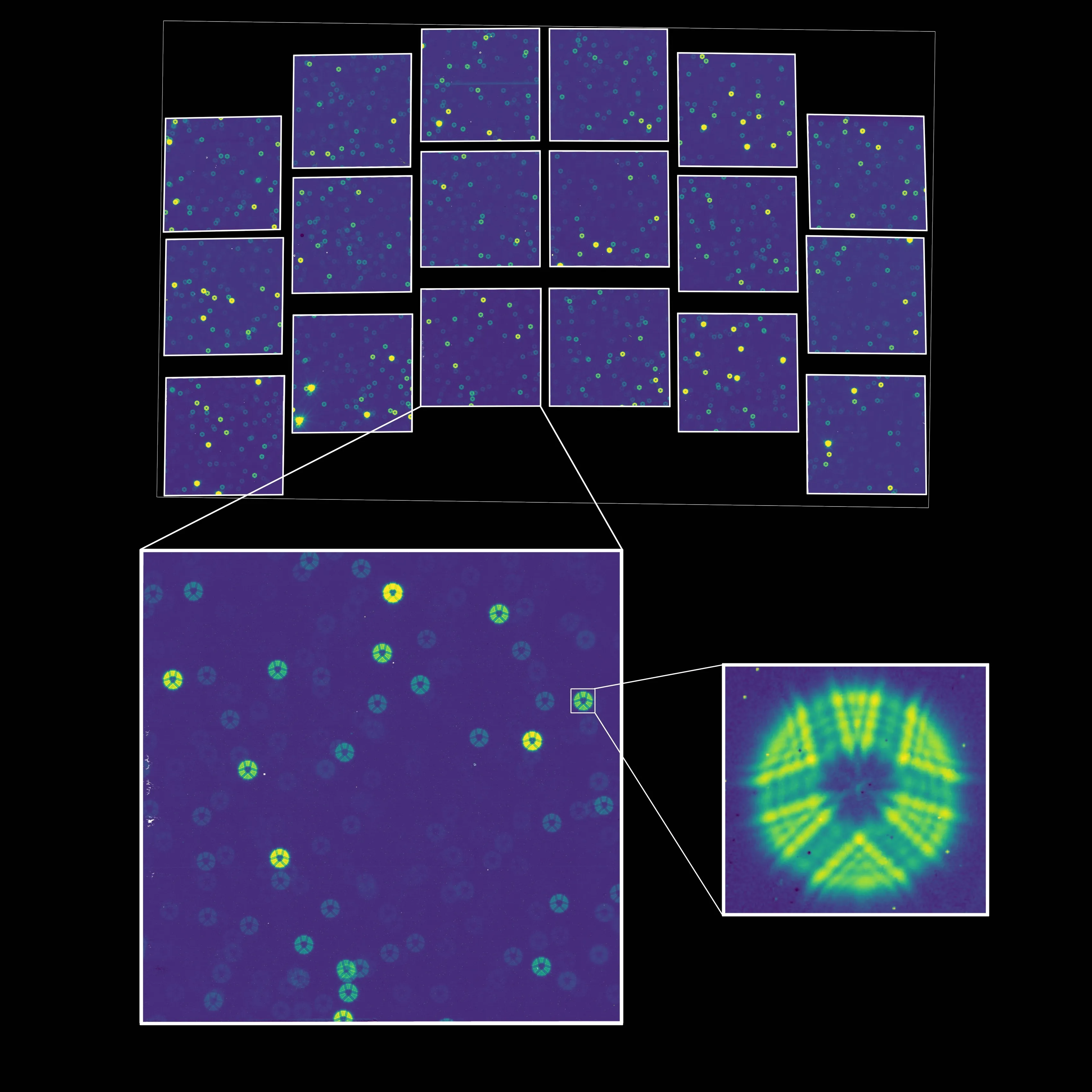
Coronagraph's first observation · 22 Sept 2026 · The Coronagraph Instrument saw starlight for the first time: a faint star in the Large Magellanic Cloud, then a crowded field there showing many stars in a single image. NASA ↗
All 10 milestones →Get an email when Roman's first science images are released. NASA expects them by early 2027. One email then, one when survey data flows. Nothing else.
Gallery
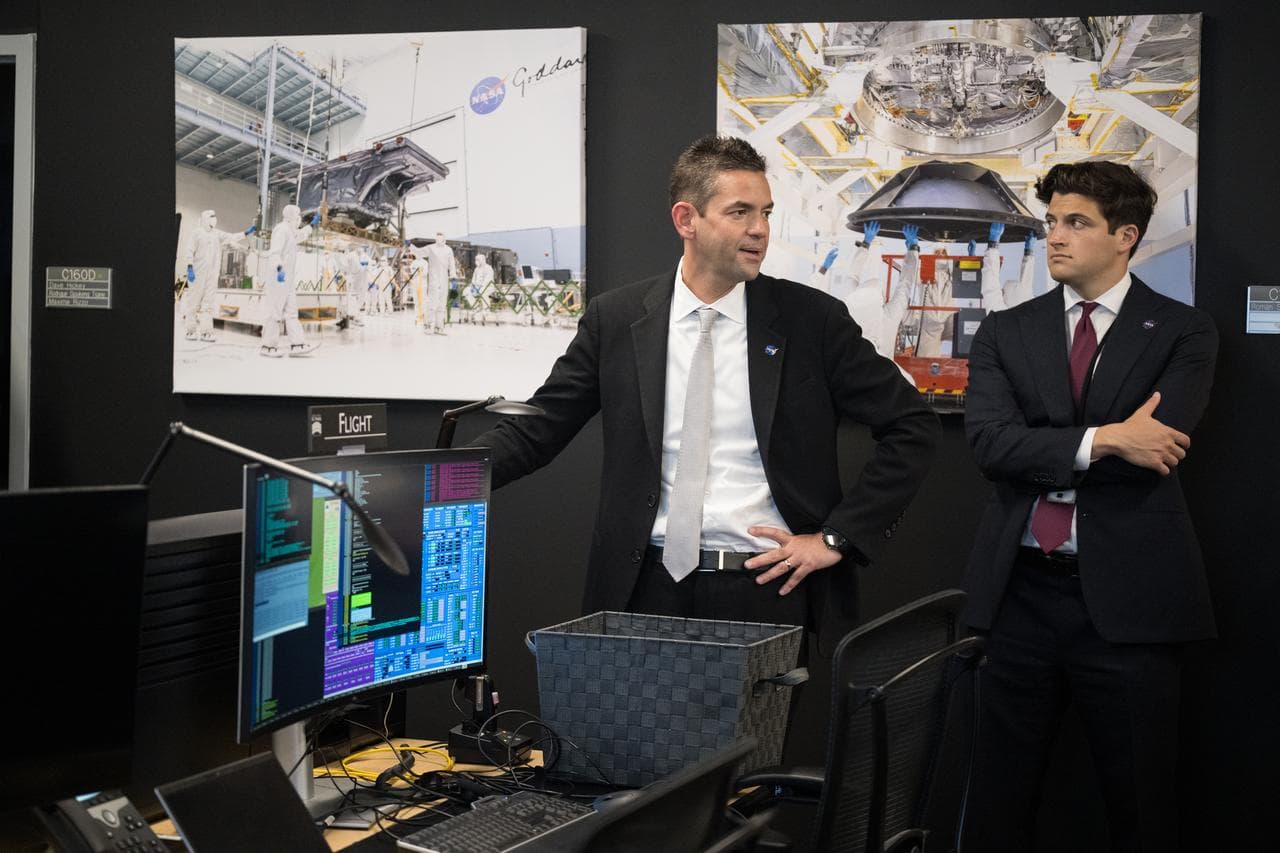
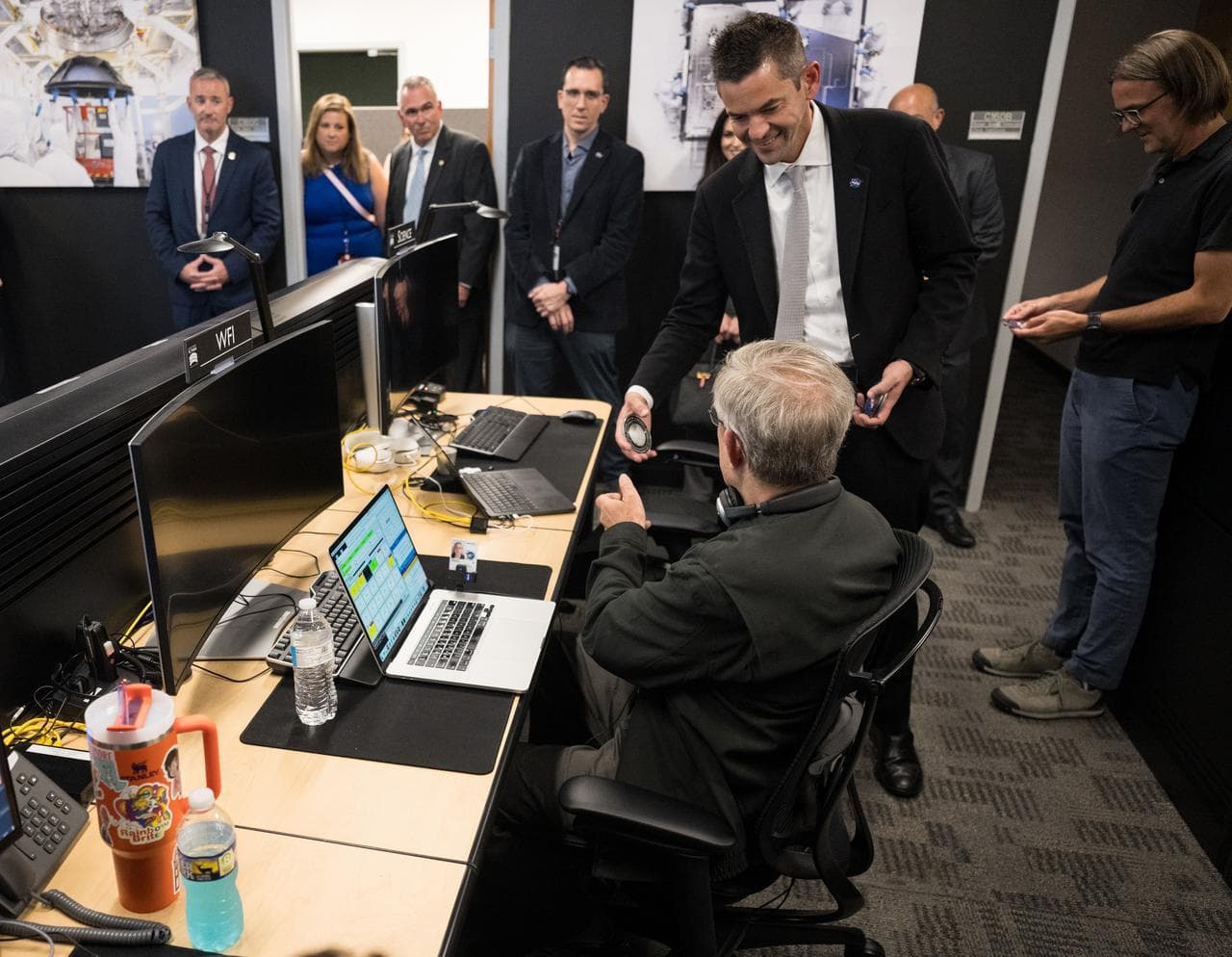
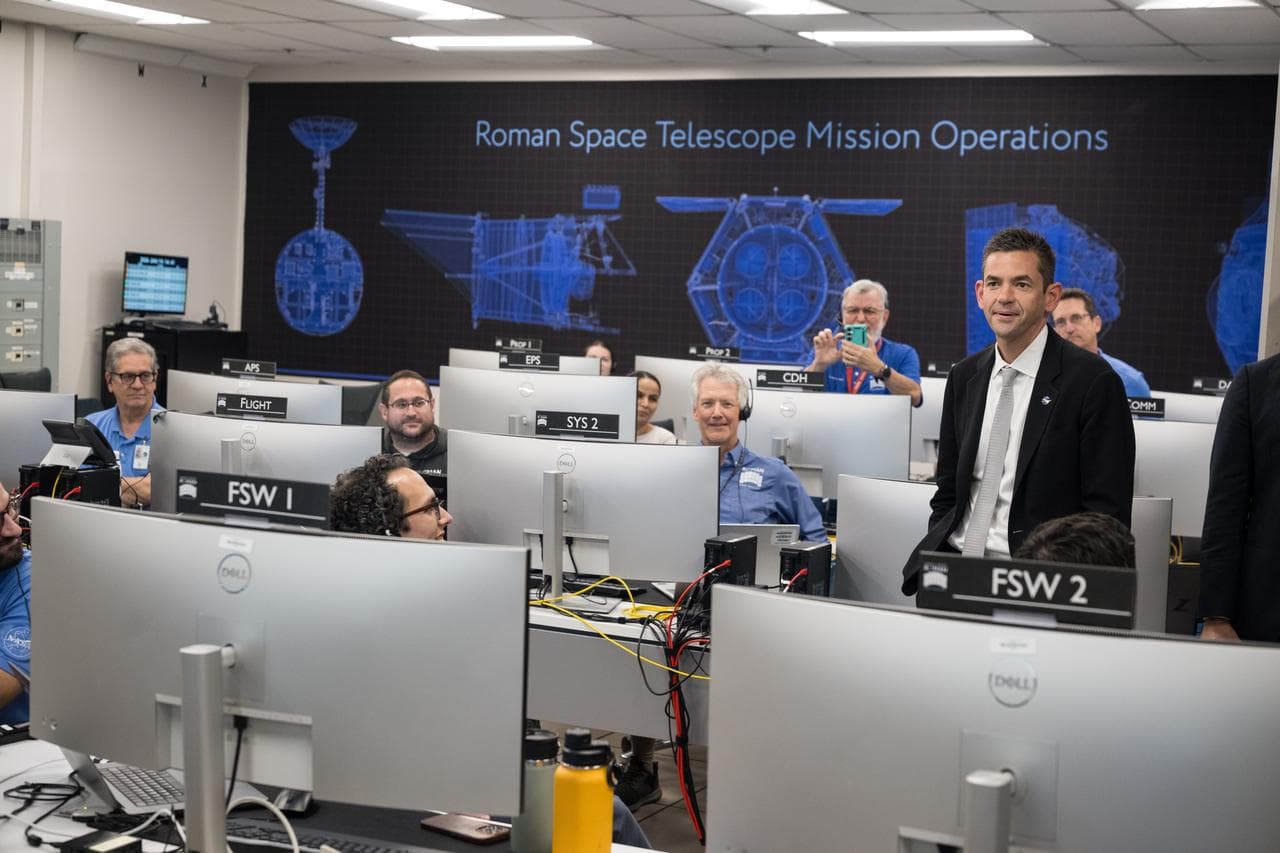
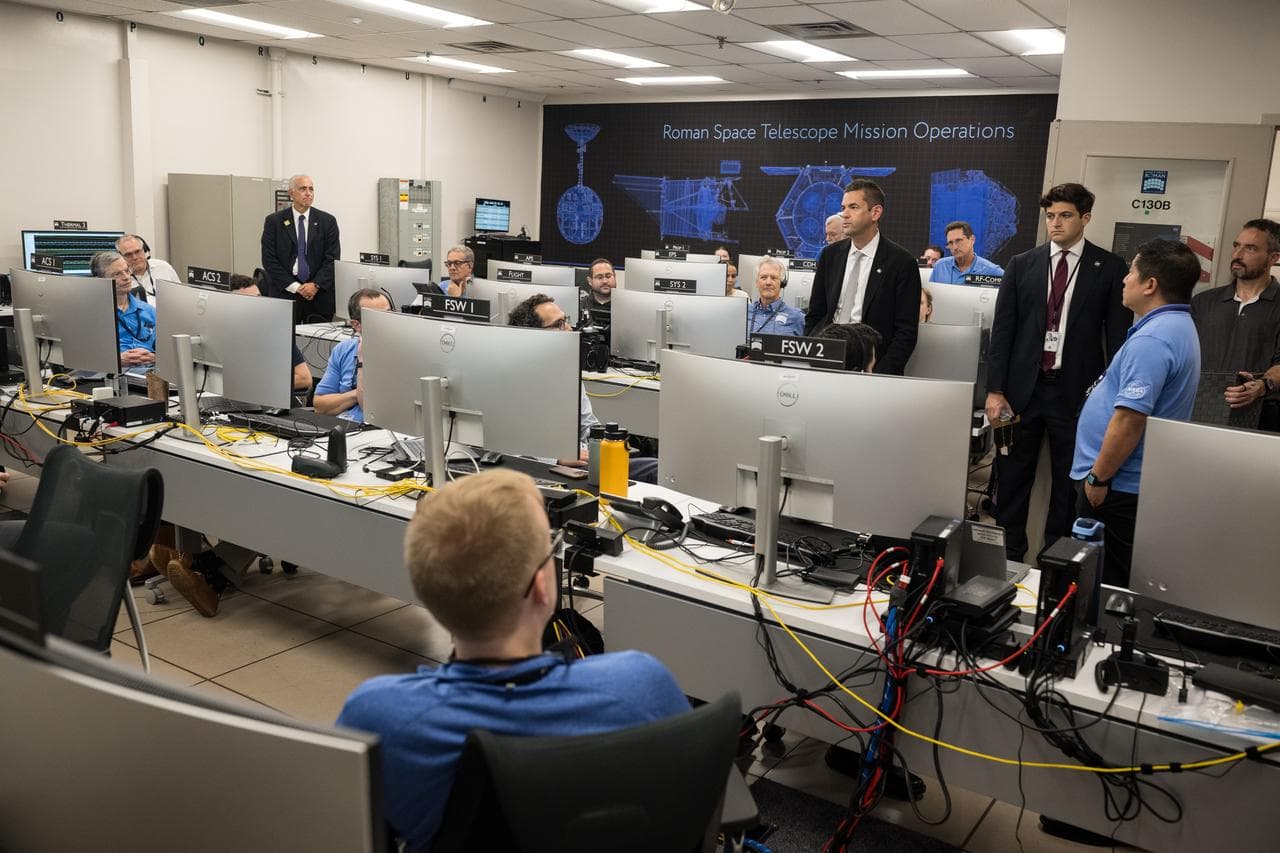
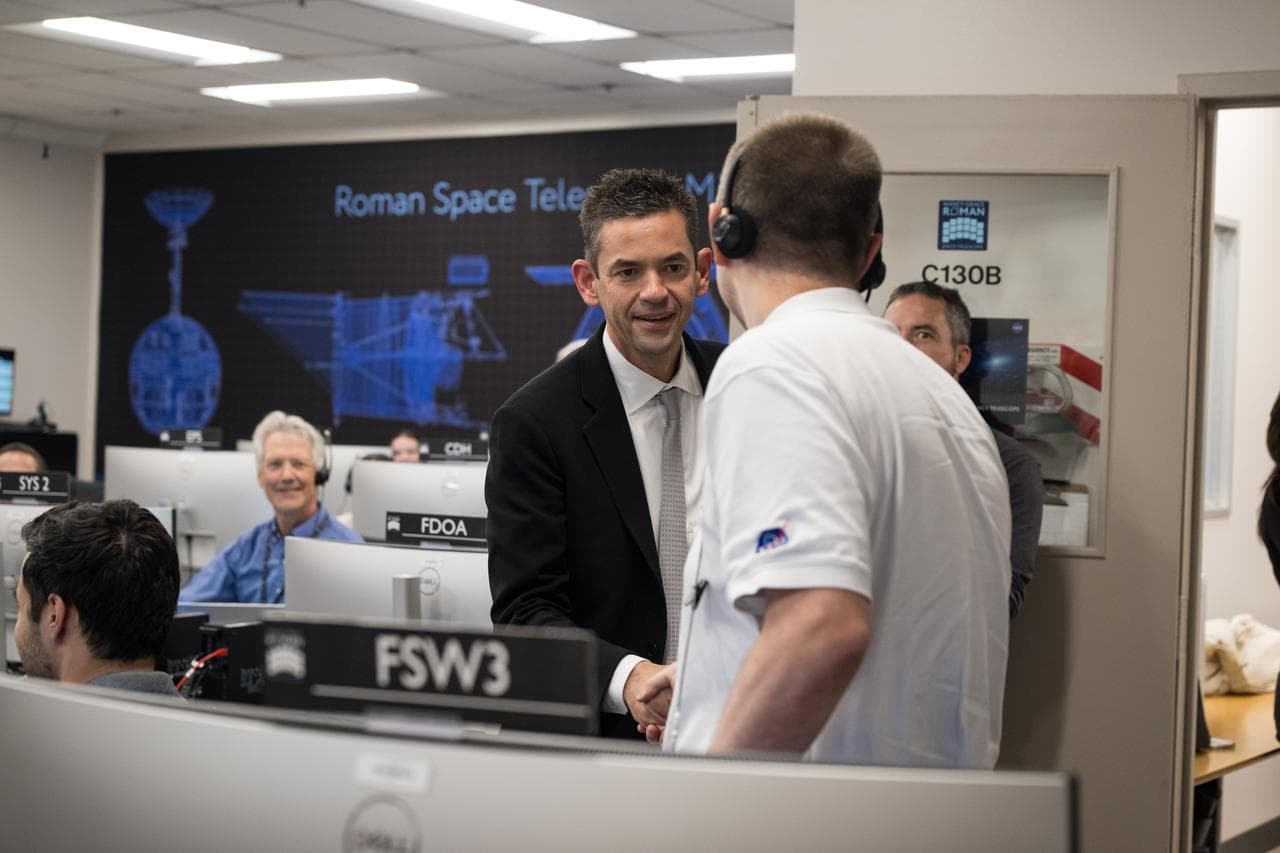
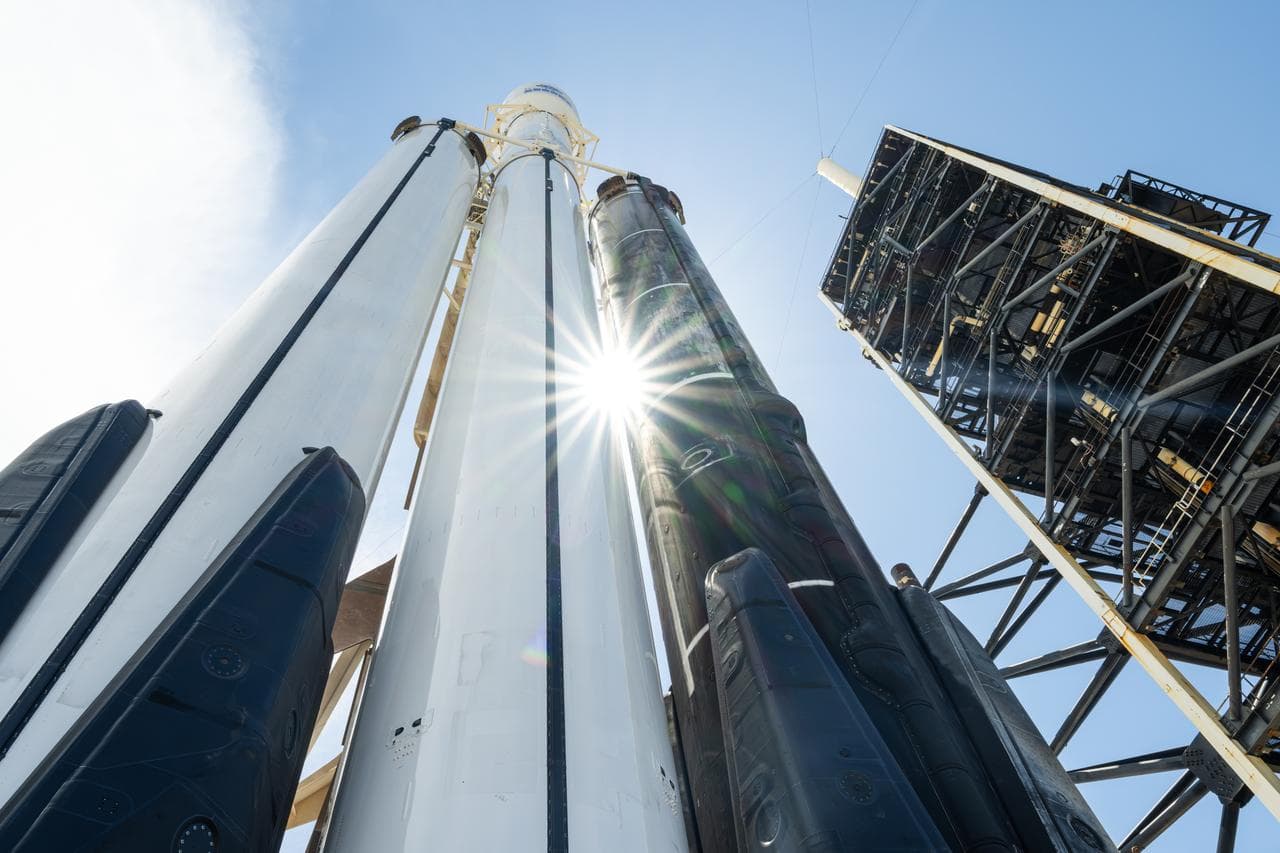
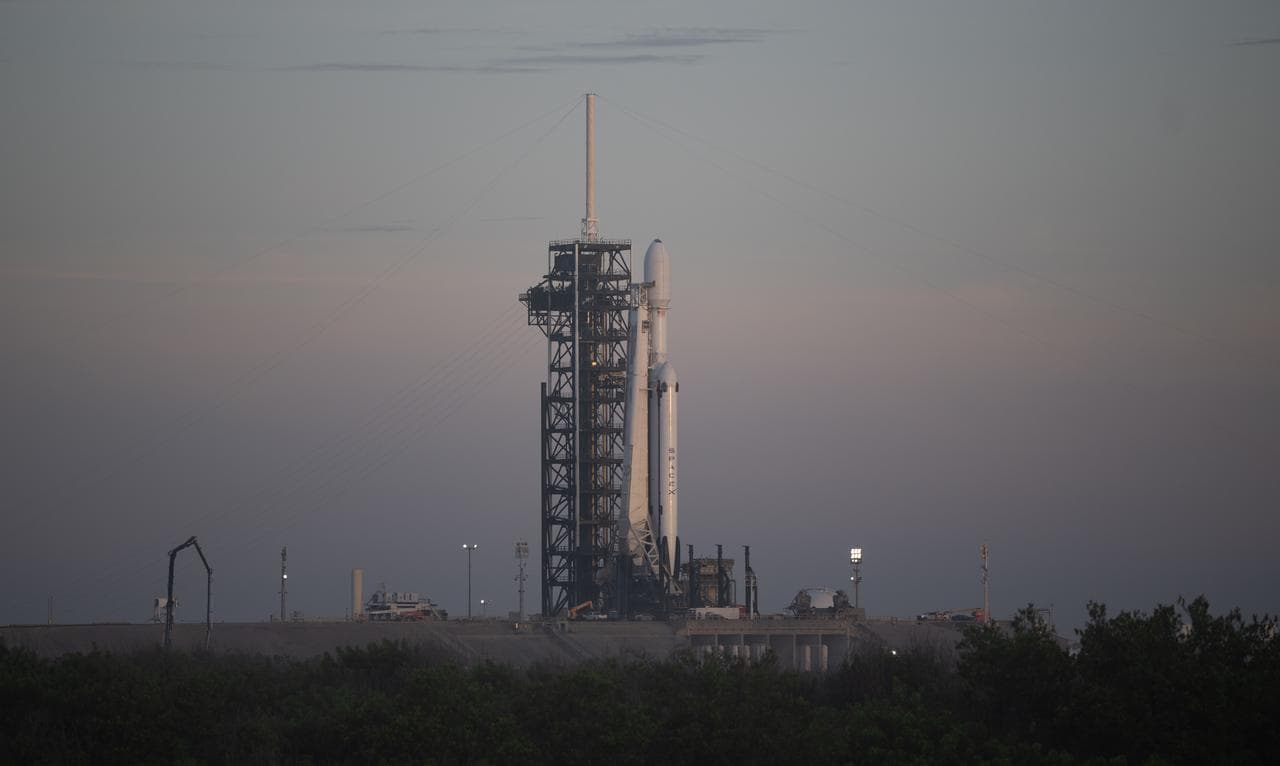
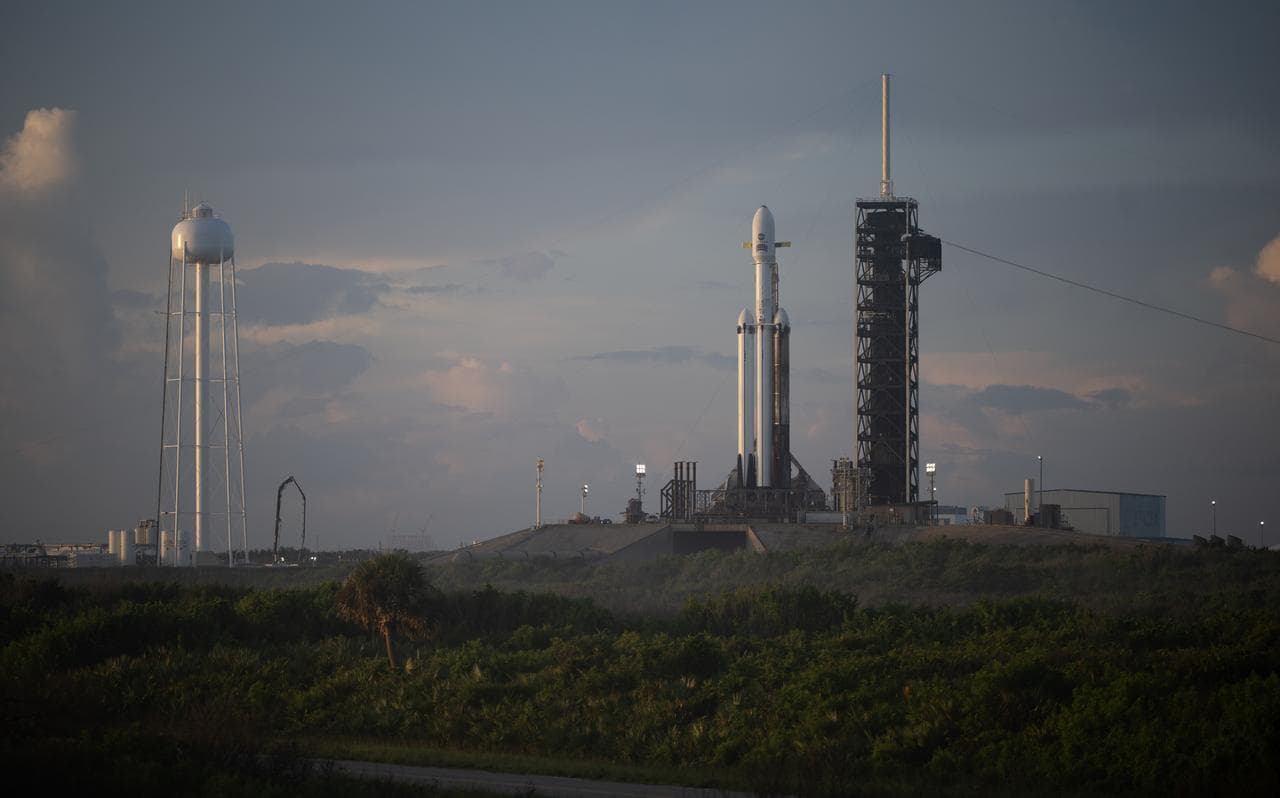
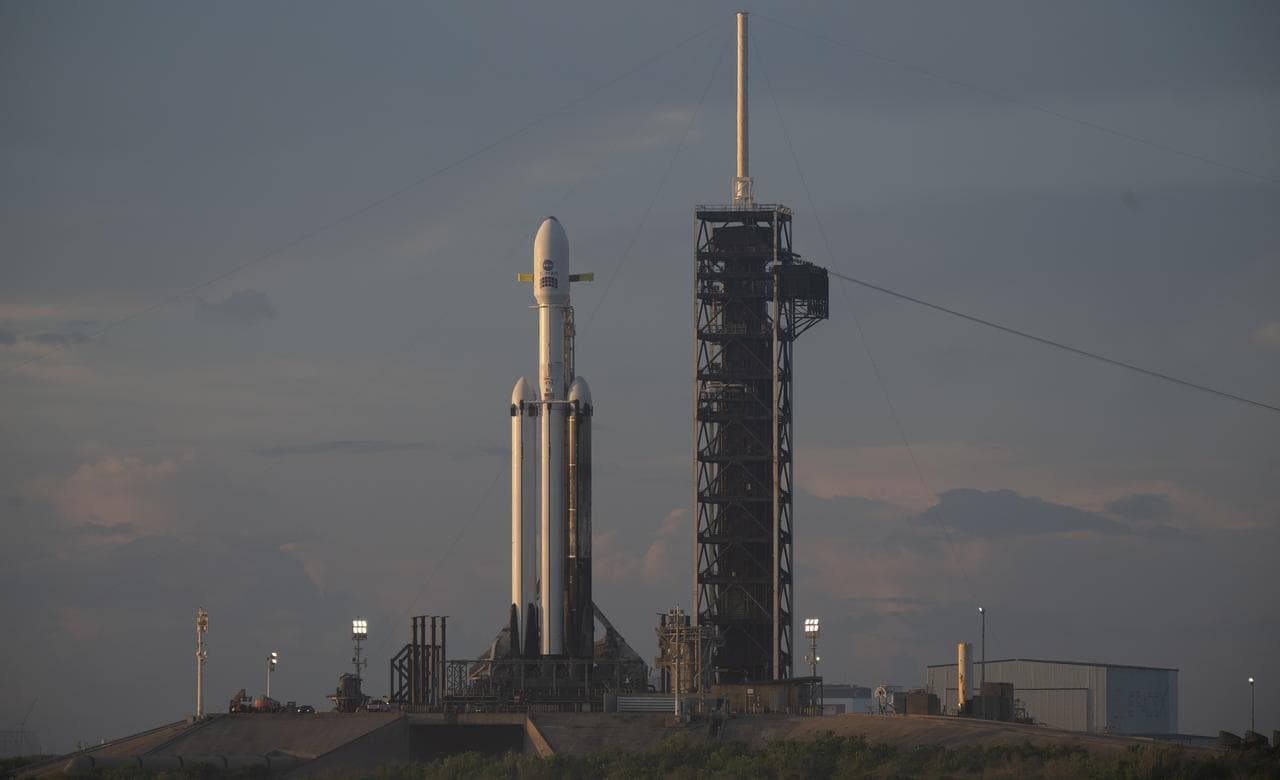
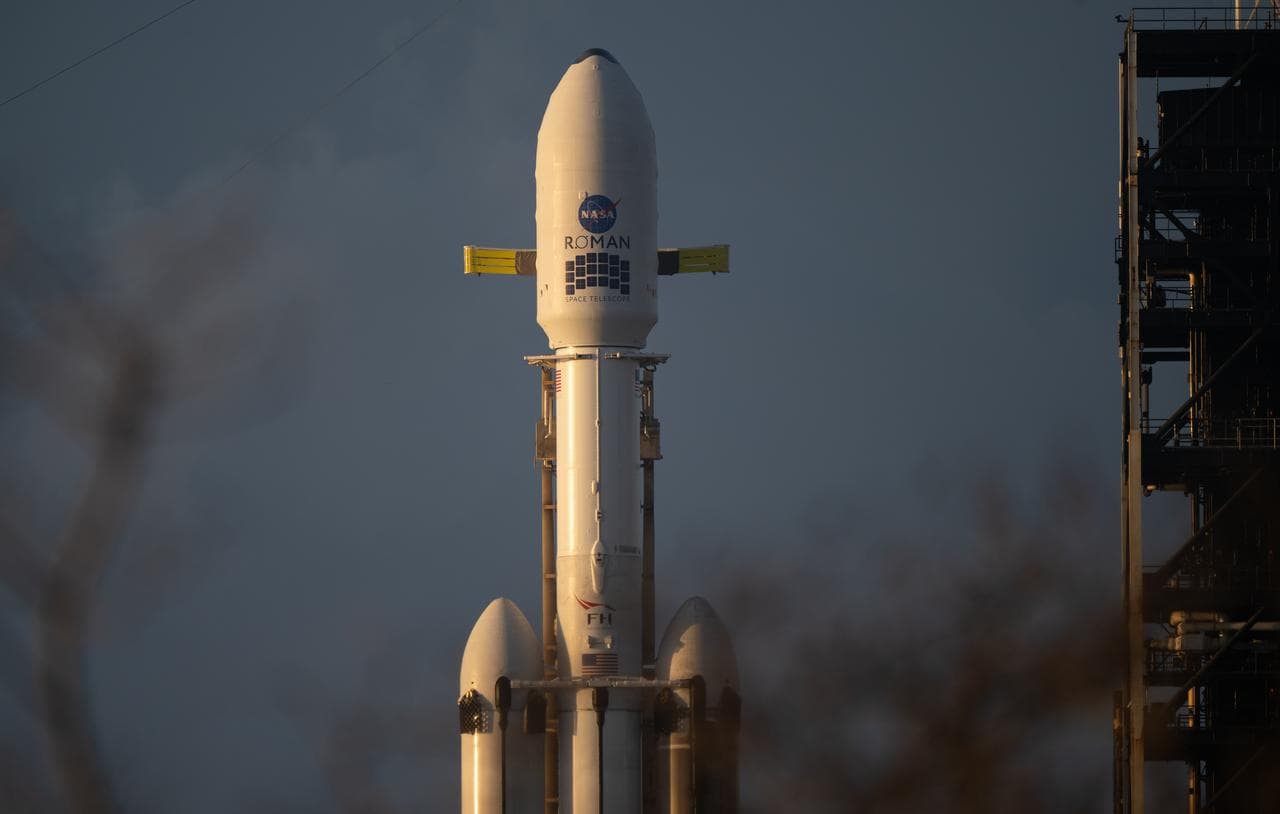
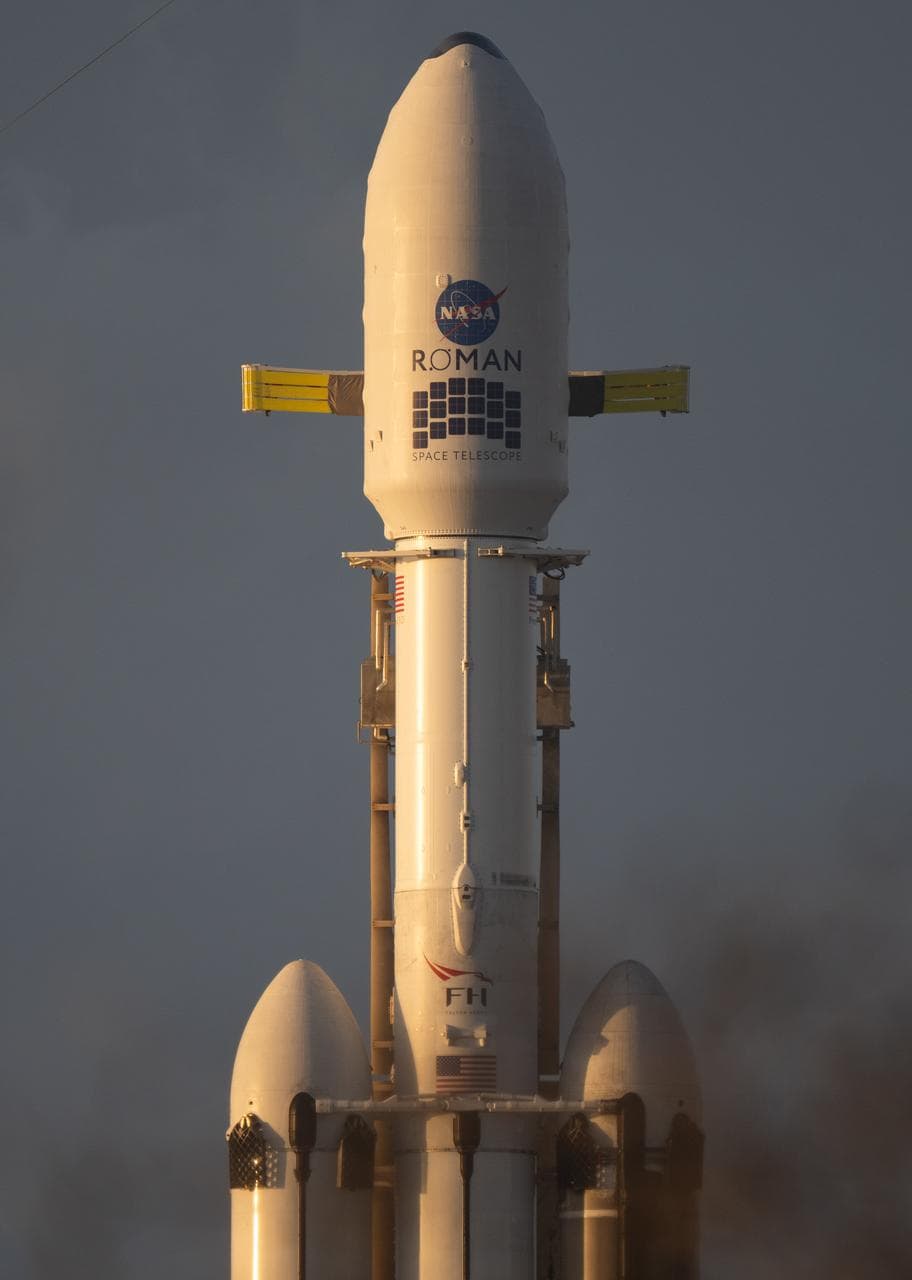
1 image from the telescope · 281 photographs of it

Trajectory
Sun–Earth rotating frame · JPL Horizons
Current activity
Launch & Orbit Verification sequence
Data flow
Roman products in the MAST archive
First science images
Early 2027
NASA's guidance. Alignment, focus and calibration come first.
Products in MAST
141,156
Exposures
4,766
On the sky
2,715
Commissioning data, catalogued hourly from MAST. An exposure is listed once per detector, so products outnumber exposures. The files are not yet publicly retrievable.
See what it has observedQuick answers
- Where is the Roman Space Telescope right now?
- About 1,499,456 km from Earth as of 18 Oct 2026, 100% of the way to Sun–Earth L2 (1,501,000 km out), per the JPL Horizons ephemeris. It is coasting and slowing, now at 0.24 km/s relative to Earth. Live position →
- When will Roman's first images be released?
- Roman's first photons, an unfocused engineering test image, came on 15 Sept 2026. NASA expects science images by early 2027, after the telescope is aligned, focused and calibrated. See the first-photons image →
- When did Roman launch?
- 30 Aug 2026 at 11:26 UTC (7:26 a.m. EDT), on a Falcon Heavy from Kennedy Space Center, LC-39A. Confirmed milestones since launch →
- When does Roman reach L2?
- NASA puts orbit insertion at about 100 days after launch, around 08 Dec 2026. Commissioning (cooling, focusing and checking out the instruments) runs in parallel. Commissioning timeline →
- Where will Roman's data be published?
- At MAST, the Mikulski Archive for Space Telescopes at STScI. Roman survey data has no proprietary period, so it is public as soon as it is processed. What it will observe →